



Introduction
Navigate 2026’s cybersecurity landscape where AI threats surge 87%, 91% of organizations revise strategies for geopolitics, and cyber-enabled fraud becomes the top CEO concern. Expert analysis with authoritative research.
Cybersecurity is no longer confined to the “backroom” domain of IT departments—it has emerged as a strategic imperative reshaping global economies, national security architectures, and personal safety. In boardrooms from Silicon Valley to Singapore, in government chambers from Washington to Brussels, the conversation has fundamentally shifted: cybersecurity is now recognized as what the World Economic Forum describes as “no longer a backroom technical function; it is a core strategic concern for governments, businesses and societies.”
The landscape of 2026 presents an unprecedented convergence of accelerating technological change, geopolitical fragmentation, and widening inequity. Artificial intelligence has evolved from an experimental tool into the primary battlefield for both cyber attackers and defenders. Geopolitical tensions have transformed from background noise into the defining force reshaping cybersecurity strategies across nations and industries. Meanwhile, the gap between the cyber-resilient “haves” and the vulnerable “have-nots” continues to widen, threatening to create a two-tiered digital economy where only well-resourced organizations can adequately protect themselves.
According to the World Economic Forum’s Global Cybersecurity Outlook 2026, developed in collaboration with Accenture, cybersecurity in 2026 is “accelerating amid growing threats, geopolitical fragmentation and a widening technological divide.” Organizations are striving to balance innovation with security—embracing AI and automation at scale, even as governance frameworks and human expertise struggle to keep pace. The result is a fast-paced, metamorphic landscape where disruptions move swiftly across borders, even as technology offers new potential for resilience.
To survive and thrive in 2026, organizations must bridge the perilous gap between rapid technology adoption and security governance, while navigating an increasingly fractured geopolitical world where cyber sovereignty concerns are reshaping international cooperation and trust. The stakes have never been higher: a single miscalculation, whether in AI governance, supply chain management, or geopolitical risk assessment, can cascade into catastrophic consequences that ripple across entire economies and societies.
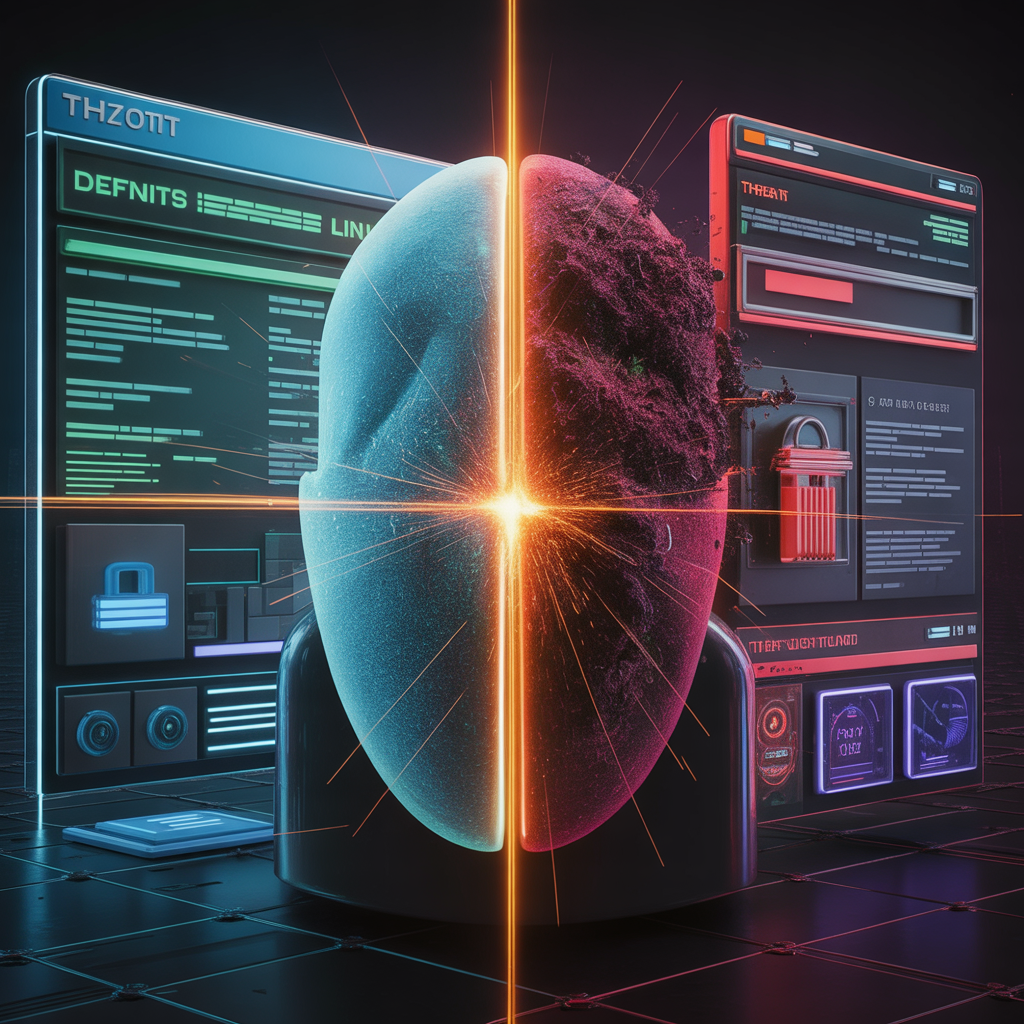
The AI Arms Race: Offense vs. Defense
The Surge of AI-Driven Transformation
Artificial intelligence has transitioned from a supporting technology to the primary driver of change across the cybersecurity landscape. According to the World Economic Forum’s survey data, an overwhelming 94% of cybersecurity leaders identify AI as the most significant driver of change in cybersecurity for 2026. This near-universal recognition is translating into concrete action across organizations: the percentage of respondents assessing the security of AI tools has nearly doubled from 37% in 2025 to 64% in 2026, reflecting a belated but necessary awakening to the dual-edged nature of this technology.
The AI revolution manifests across every dimension of organizational operations. Machine learning algorithms now detect anomalies in network traffic patterns that would escape human analysts. Natural language processing enables automated analysis of threat intelligence from thousands of sources simultaneously. Predictive analytics forecast attack vectors before they materialize. Yet this same technological prowess empowers adversaries with capabilities that were science fiction mere years ago.
Moody’s cybersecurity outlook report predicts that AI-related threats such as model poisoning will “become more prevalent and pronounced” as more companies adopt the technology without proper safeguards. The research firm warns that 2026 is likely to bring “adaptive malware” that is hard for defenders to spot, as well as AI agents that help hackers launch attacks more quickly, with early indications of autonomous attacks emerging—something that experts have grown increasingly worried about amid companies’ recent disclosures.
The Threat: Vulnerabilities Accelerating at Unprecedented Pace
The most alarming statistic from the cybersecurity outlook reveals the velocity of this transformation: 87% of cybersecurity leaders report that AI-related vulnerabilities are the fastest-growing cyber risk over the course of 2025. This acceleration outpaces every other category of cyber threat, including traditional concerns like ransomware, phishing, and supply chain attacks.
The nature of AI vulnerabilities differs fundamentally from conventional cybersecurity threats. Chief executive officers are increasingly concerned with what Harvard Business Review describes as “adversarial capabilities”—particularly deepfakes and AI-generated deception. The very concept of identity, one of the bedrocks of trust in the enterprise, is poised to become the primary battleground of the AI economy in 2026. This crisis finds its most visceral expression in the “CEO doppelgänger”—a perfect, AI-generated replica of a leader capable of commanding the enterprise in real time.
According to Help Net Security’s survey of IT leaders, approximately 66% of respondents identified AI-generated attacks as the most significant threat to data heading into 2026, surpassing even ransomware in perceived severity. The shift in CEO concerns from technical vulnerabilities to data leaks and adversarial capabilities reflects a sophisticated understanding that AI doesn’t merely accelerate existing attack patterns—it fundamentally transforms the nature of cyber warfare itself.
The Defense: AI-Powered Security at Scale
On the defensive side, organizations are deploying AI with remarkable results in specific domains. Phishing detection systems powered by machine learning now identify sophisticated social engineering attempts with accuracy rates exceeding 99%. Automated threat hunting platforms scan millions of log entries per second, identifying patterns that would require armies of human analysts. Security orchestration, automation, and response (SOAR) platforms coordinate defensive actions across dozens of security tools simultaneously, responding to threats in milliseconds rather than hours.
Palo Alto Networks predicts that with enterprises expected to deploy a massive wave of AI agents in 2026, “the cyber gap narrative will fundamentally change.” The widespread enterprise adoption of these agents will finally provide the force multiplier security teams have desperately needed. For a Security Operations Center (SOC), this means triaging alerts to end alert fatigue and autonomously blocking threats in seconds. These agents drastically cut response and processing times, enabling human teams to move from manual operators to commanders of the new AI workforce.
Yet even as defensive AI capabilities mature, a critical gap remains: “security by design” is often lagging behind adoption. Organizations rush to deploy AI systems for operational efficiency without conducting thorough security assessments. According to research, the percentage of organizations with processes to assess AI security, while doubling year-over-year, still represents only 64% of surveyed entities—meaning more than one-third of organizations are deploying potentially vulnerable AI systems without proper security evaluation.
This lag creates what security experts call the “AI paradox”: the same technology designed to strengthen defenses simultaneously expands the attack surface faster than traditional security controls can adapt. Machine identities now outnumber human employees by 82 to 1, according to industry research cited by Palo Alto Networks, creating an identity management challenge of unprecedented complexity. Each AI agent, each machine learning model, each automated system represents both a defensive asset and a potential vulnerability—a duality that defines the cybersecurity landscape of 2026.
Geopolitics is the New Firewall
Strategic Shifts Reshaping Cyber Defense
Geopolitics has emerged as the dominant force shaping cybersecurity strategies in 2026, fundamentally altering how organizations assess risk, design defenses, and make investment decisions. According to the World Economic Forum’s research, 64% of organizations are now accounting for geopolitically motivated cyberattacks—such as disruption of critical infrastructure or espionage—in their risk mitigation strategies. This represents a seismic shift from even three years ago, when geopolitical considerations were largely the domain of government agencies and defense contractors.
The most striking statistic reveals the pervasiveness of this transformation: 91% of the largest organizations have changed their cybersecurity strategies due to geopolitical volatility. This near-universal strategic adjustment reflects a hard-learned lesson from recent years: cyber capabilities have become integral tools of statecraft, deployed alongside traditional diplomatic and economic instruments to advance national interests, punish adversaries, and project power.
In response to geopolitical volatility, survey respondents identified a stronger focus on threat intelligence and deeper engagement with government agencies as the top two drivers of change in their cybersecurity strategies. The implications are profound: cybersecurity is no longer solely a private sector concern but rather a domain requiring unprecedented public-private cooperation, information sharing, and coordinated response capabilities.
The Sovereignty Dilemma: Retreat from Global Dependencies
One of the most significant trends shaping 2026 is what observers call “cyber sovereignty”—the strategic retreat of nations and companies from global dependencies to protect critical infrastructure and sensitive data. This fragmentation manifests in multiple forms: data localization requirements that mandate certain information remain within national borders; restrictions on foreign technology providers in critical sectors; and the development of “sovereign clouds” designed to ensure data never leaves national jurisdiction.
According to analysis from Forrester Research, five governments will nationalize or place restrictions on critical telecom infrastructure in 2026. The Salt Typhoon cyberespionage campaign, which breached over 600 organizations across 80 countries, exposed the vulnerability of commercial telecom infrastructure to nation-state actors who can go undetected for years. This has prompted governments to respond with direct oversight mandates, such as Australia’s reinforced Security of Critical Infrastructure (SOCI) Act reforms and Italy’s €22 billion restructuring of Telecom Italia’s network.
The dilemma inherent in cyber sovereignty lies in its dual nature: while it potentially enhances security by reducing exposure to foreign adversaries, it simultaneously fragments the global digital ecosystem, raises costs, reduces interoperability, and can stifle innovation. Organizations operating across multiple jurisdictions face an increasingly complex compliance landscape where data that flows seamlessly in one country must be siloed and protected in another, where cloud services readily available in Europe may be prohibited in Asia, and where security tools approved by one government may be banned by another.
According to Euronews analysis, Russia’s cyber operations are expected to continue in Ukraine but also to “prioritise long-term global strategic goals,” such as ramping up information operations against the United States and other Western nations. China will likely continue executing cyber campaigns to strengthen its political and economic influence, while Iran is expected to ramp up cyber operations in the Middle East. This multipolar threat environment compels organizations to develop threat models that account for the specific capabilities, motivations, and tradecraft of multiple nation-state adversaries simultaneously—a level of sophistication that was unnecessary when cyber threats were primarily criminal in nature.
The Confidence Gap: Regional Disparities in Preparedness
Perhaps most concerning is the erosion of confidence in national cyber preparedness amid rising geopolitical threats. According to World Economic Forum data, 31% of survey respondents reported low confidence in their nation’s ability to respond to major cyber incidents in 2026—up from 26% the previous year. This declining confidence occurs precisely when the stakes are highest and the threats most sophisticated.
Regional disparities in preparedness reveal a starkly divided world. Confidence levels range dramatically by geography: respondents from the Middle East and North Africa express a high degree of confidence in their country’s ability to protect critical infrastructure (84%), while confidence plummets to just 13% in Latin America and the Caribbean. These disparities reflect vast differences in cybersecurity investment, institutional capacity, technical expertise, and government prioritization of cyber defense.
This confidence gap creates dangerous vulnerabilities in the interconnected global economy. A nation-state adversary need not compromise the strongest link in a supply chain or alliance network—they need only identify and exploit the weakest. When multinational corporations operate across regions with vastly different levels of cyber preparedness, the security posture of their operations in low-confidence regions can become the Achilles heel that compromises their entire global infrastructure.
PwC’s 2026 Global Digital Trust Insights survey found that 60% of respondents say they are increasing their cyber risk investment in response to geopolitical volatility. Yet investment alone cannot close the confidence gap if fundamental capacity issues—such as skills shortages, outdated infrastructure, and inadequate governance frameworks—remain unaddressed. The geopolitical dimension of cybersecurity in 2026 demands not merely technical solutions but rather comprehensive national strategies that build institutional capacity, foster public-private partnerships, and enable effective coordination across government, industry, and international partners.
The Human Cost: Fraud and the Skills Gap
Fraud Epidemic: The New Top CEO Concern
A seismic shift has occurred in the hierarchy of cyber threats facing senior executives: cyber-enabled fraud has overtaken ransomware as the top concern for CEOs worldwide. This transition reflects both the evolving sophistication of fraud schemes and their deeply personal impact on executives, employees, and customers alike.
According to World Economic Forum research, 73% of survey respondents reported that they or someone in their network had been personally affected by cyber-enabled fraud over the course of 2025. This staggering prevalence transforms cybersecurity from an abstract corporate concern into a tangible threat that touches the lives of individuals across all levels of society. The geographic distribution of fraud exposure reveals troubling patterns: sub-Saharan Africa leads the trend with 82% of respondents reporting exposure to digital scams, followed by North America at 79%.
The shift in CEO priorities from ransomware to fraud reflects several converging factors. First, the democratization of AI tools has enabled fraudsters to conduct highly personalized, sophisticated attacks at scale. According to industry analysis, attackers will increasingly leverage AI tools including “vishing” (AI voice-cloning that creates hyperrealistic impersonations of humans), prompt injection attacks that manipulate AI systems to bypass security protocols, and deepfakes indistinguishable from reality.
Second, the financial and reputational costs of fraud often exceed those of traditional cyberattacks. While ransomware typically affects individual organizations, large-scale fraud operations can erode consumer trust across entire industries, trigger regulatory investigations, generate class-action lawsuits, and inflict lasting damage to brand reputation. Chief Information Security Officers (CISOs), by contrast, remain more concerned about ransomware and supply chain resilience according to WEF data, reflecting a persistent disconnect between boardroom priorities and front-line cybersecurity concerns.
The Talent Crisis: Cyber Inequity Driven by Skills Shortages
The cybersecurity skills gap has evolved from a persistent challenge into a full-blown crisis that threatens to stratify the global economy into the cyber-resilient “haves” and the vulnerable “have-nots.” According to industry research, the global cybersecurity workforce gap reached 4.8 million unfilled professionals in 2024, with the shortage projected to remain severe through 2026 and beyond.
This is not merely a hiring problem—it is a systemic failure that compounds existing inequalities. Organizations are divided into categories based on their resilience capabilities, with profound implications for their cyber risk exposure. Research indicates that 85% of low-resilience organizations lack critical cybersecurity skills, compared to only 29% of large, well-resourced organizations. This disparity creates a vicious cycle: organizations without adequate skills cannot effectively defend themselves, leading to breaches that further drain resources and make skilled talent recruitment even more difficult.
The most acute skills shortages manifest in specific sectors and regions. According to World Economic Forum findings, the public sector and NGOs report particularly severe talent deficits, with 57% of public sector organizations and 51% of NGOs identifying insufficient cybersecurity expertise as a critical challenge. Regionally, Latin America and the Caribbean face skills shortages affecting 65% of organizations, while sub-Saharan Africa reports similar deficits at approximately 63%.
The nature of the skills gap has also evolved. According to ISC2 research cited by MSSP Alert, the top concern of cybersecurity professionals shifted in 2025 from staffing levels to skills shortages themselves. Almost 90% of survey respondents said their organization sustained at least one significant cybersecurity incident due to a shortage of skills, with 69% experiencing more than one incident. About 95% said they have at least one skill need, and 59% pointed to critical or significant skill needs—both increased from the previous year’s results.
The “haves” versus “have-nots” divide extends beyond organizational size to encompass industry sectors, geographic regions, and even functional specializations within cybersecurity. Large financial institutions and technology companies can offer compensation packages, career development opportunities, and cutting-edge projects that attract top talent. Meanwhile, small and medium enterprises, public sector agencies, critical infrastructure operators, and organizations in developing economies struggle to compete for the same limited pool of qualified professionals.
This cyber inequity has profound implications for systemic risk. As research highlights, the interconnected nature of modern supply chains means that an organization is only as secure as its weakest link. Large corporations with world-class security teams remain vulnerable if their suppliers, vendors, and partners lack the skills to properly vet their own systems and protect sensitive data. The World Economic Forum identifies supply chain vulnerabilities as the top ecosystem cyber risk, with 54% of large organizations calling it their biggest barrier to resilience.
The burnout epidemic among existing cybersecurity professionals further exacerbates the talent crisis. According to industry analysis, nearly half of all cybersecurity leaders will change jobs by 2025 due to work-related stress, with 66% of professionals stating their role is significantly more stressful now than five years ago. High turnover rates compound the skills gap, as organizations lose institutional knowledge and must continually invest in training new hires who may themselves depart before developing deep expertise.
The Blind Spots: Supply Chains and Future Tech
The Weakest Link: Inheritance Risk in Supply Chains
Organizations have awakened to a sobering reality: they inherit the security posture of every vendor, supplier, and partner in their ecosystem. This “inheritance risk” has emerged as one of the most intractable challenges in cybersecurity, as even organizations with robust internal defenses find themselves compromised through third-party vulnerabilities.
The interconnected nature of modern supply chains creates cascading vulnerabilities that can ripple across entire industries. When a security flaw exists in widely deployed software, millions of organizations become simultaneously vulnerable. When a logistics provider suffers a breach, the sensitive operational data of hundreds of clients becomes exposed. When a cloud service provider experiences an outage or compromise, the business continuity of countless dependent organizations hangs in the balance.
According to cybersecurity experts cited by Dark Reading, “I think it would be surprising if we didn’t see major supply chain attacks in 2026.” This expectation reflects the demonstrated effectiveness of supply chain compromise as an attack vector and the persistent challenges organizations face in securing their extended ecosystem.
The difficulty of managing supply chain risk stems from multiple factors. First, organizations often lack visibility into the security practices of their vendors, particularly those several tiers removed in complex supply networks. Second, contractual relationships rarely provide meaningful security assurances or liability protection when breaches occur. Third, the pace of digital transformation means new vendors and technologies are constantly being integrated into supply chains, often without thorough security assessment.
Solutions Review’s compilation of industry predictions warns that “the interconnected world of SaaS applications will emerge as the most significant vulnerability for enterprises in 2026.” As companies continue moving away from on-premise infrastructure to cloud-based solutions, threat actors are shifting their focus from traditional infrastructure to third-party and even fourth-party supplier risks. What makes this particularly concerning is that adversaries are leveraging AI to accelerate their ability to identify and exploit vulnerabilities across these complex supplier networks—turning what were once time-consuming surveillance efforts into automated processes.
Emerging Frontiers: The Silent Threats of 2026
Beyond the well-publicized threats of AI and geopolitics lurk emerging technological risks that receive insufficient attention despite their potentially catastrophic impact. These “silent” threats of 2026 include quantum computing’s impending disruption of cryptographic systems, and the overlooked vulnerabilities of undersea cables and space-based infrastructure that underpin global connectivity.
Quantum Computing: The Approaching Storm
The quantum computing threat has transitioned from theoretical concern to imminent reality. According to research from the cybersecurity community, quantum readiness is moving “from theoretical to existential” in 2026, with organizations that haven’t started planning for a post-quantum world already behind. While estimates vary on when cryptographically relevant quantum computers will emerge, the “harvest now, decrypt later” threat is already a present reality—adversaries are collecting encrypted data today with the expectation of decrypting it once quantum capabilities mature.
Palo Alto Networks predicts that by 2026, “this reality will spark the largest and most complex cryptographic migration in history, as government mandates compel critical infrastructure and their supply chains to begin the journey to post-quantum cryptography (PQC).” The tipping point will arrive with the first major government mandates requiring time-bound plans for PQC migration, coupled with public quantum computing milestones that shift the threat perception from a decade-long problem to a three-year emergency.
The operational complexity of quantum-safe migration cannot be overstated. Every encrypted communication channel, every digital certificate, every cryptographic key across an enterprise’s global infrastructure must be inventoried, assessed, and eventually replaced with quantum-resistant alternatives. According to KPMG analysis, about 60% of organizations in Canada and 78% in the US expect quantum computers to become mainstream by 2030, yet only 25% of firms say the threat is currently being addressed in their risk management strategy—a dangerous disconnect between awareness and action.
Critical Infrastructure: Undersea Cables and Space Assets
The global digital economy depends on physical infrastructure that remains woefully undersecured. Undersea fiber optic cables carry approximately 95% of international data traffic, yet these cables remain vulnerable to both physical attack and electronic surveillance. Similarly, the proliferation of Low Earth Orbit (LEO) satellite constellations for communications and navigation creates new attack surfaces that lack robust security frameworks.
According to Forrester’s cybersecurity predictions, telecom relies on vast Internet-of-Things ecosystems that are notoriously insecure and frequently exploited, while the rapid rise of space infrastructure such as low-Earth-orbit satellites adds new attack surfaces that existing security paradigms were never designed to address. Nation-state adversaries have demonstrated both the capability and willingness to target this infrastructure, whether through physical tampering with undersea cables, GPS spoofing that affects civilian and military navigation, or cyberattacks against satellite control systems.
The strategic implications are profound: a successful attack on critical undersea cable infrastructure could fragment global internet connectivity, disrupting everything from financial transactions to military communications. Compromise of satellite navigation systems could affect aviation safety, precision agriculture, emergency response coordination, and countless other applications that depend on accurate positioning data. Yet these infrastructure vulnerabilities receive a fraction of the attention and investment devoted to more visible cybersecurity concerns.
Conclusion
Summary: Technology Alone Isn’t the Solution
The cybersecurity landscape of 2026 presents a paradox: organizations have access to more sophisticated defensive technologies than ever before, yet they face threats of unprecedented complexity and velocity. The fundamental lesson emerging from this analysis is that technology alone cannot deliver cyber resilience. Despite impressive advances in AI-powered defense, zero-trust architectures, and automated response capabilities, the human elements of cybersecurity—skills, collaboration, governance, and strategic thinking—remain the ultimate determinants of success or failure.
The World Economic Forum emphasizes that “cybersecurity is not merely an IT function—it is a strategic business imperative and a cornerstone of national economic resilience.” This recognition must translate into concrete action: board-level engagement, adequate investment in people and training, strategic partnerships that span sectors and borders, and governance frameworks that keep pace with technological change.
Resilience in 2026 requires closing the skills gap that creates dangerous disparities between cyber-resilient organizations and vulnerable ones. It demands addressing the supply chain blind spots that allow adversaries to compromise even well-defended targets through third-party vulnerabilities. It necessitates preparing for emerging threats like quantum computing that could retroactively render years of encrypted data insecure. Most fundamentally, it requires moving beyond the reactive, siloed approach that has characterized cybersecurity for decades toward a proactive, collaborative model that recognizes cyber risk as a shared challenge requiring collective response.
Call to Action: From Reactive Defense to Proactive Cyber Resilience
The path forward demands a fundamental shift in mindset from reactive defense to proactive cyber resilience. Organizations must recognize that breaches are inevitable—the question is not “if” but “when”—and design systems that can detect intrusions rapidly, contain damage effectively, recover quickly, and emerge stronger from incidents. This resilience-first approach requires several critical elements:
1. Ecosystem-Wide Cooperation: No organization can achieve cyber resilience in isolation. The interconnected nature of modern digital ecosystems demands unprecedented levels of information sharing, coordinated response, and mutual support. Industry experts emphasize that “strengthening collective cyber resilience has become both an economic and a societal imperative” and that “cybersecurity is a frontier where collaboration remains not only possible, but powerful.”
2. Investment in Human Capital: Closing the skills gap requires sustained commitment to workforce development at every level. Organizations must invest in training existing staff, creating clear career pathways that retain talent, partnering with educational institutions to build talent pipelines, and fostering diversity that brings varied perspectives to security challenges. Governments must recognize cybersecurity capacity building as a strategic priority equivalent to traditional infrastructure investment.
3. Proactive Governance for Emerging Technologies: As AI agents proliferate and quantum computing approaches viability, governance frameworks must anticipate risks before they materialize. According to PwC research, only 24% of organizations currently spend significantly more on proactive measures than reactive responses—a ratio that must be inverted if organizations hope to stay ahead of adversaries rather than perpetually responding to breaches.
4. Strategic Engagement with Geopolitics: Organizations can no longer treat geopolitical risk as someone else’s problem. The 91% of large organizations that have already adjusted their cybersecurity strategies due to geopolitical volatility represent the leading edge of a necessary transformation. Strategic engagement means developing threat intelligence capabilities, deepening partnerships with government agencies, diversifying supply chains to reduce concentration risk, and building resilience to withstand disruptions in the fragmenting global digital ecosystem.
5. Preparation for Quantum-Safe Migration: The quantum timeline is collapsing faster than anticipated. Organizations must begin quantum-safe planning immediately: conducting cryptographic inventories, prioritizing systems based on data sensitivity and longevity requirements, testing post-quantum algorithms, and developing migration roadmaps. Waiting for government mandates or industry standards to finalize guarantees falling behind adversaries who are already collecting encrypted data for future decryption.
The cybersecurity challenges of 2026 are daunting, but they are not insurmountable. The convergence of AI acceleration, geopolitical fragmentation, and widening cyber inequity creates risks that no organization or nation can address alone. Yet this same interconnected vulnerability creates opportunities for collaboration that can benefit all participants. By shifting from reactive defense to proactive resilience, by investing in people as much as technology, by fostering cooperation across traditional boundaries, and by preparing today for the threats of tomorrow, organizations and nations can navigate the turbulent cybersecurity landscape of 2026 and build a more secure digital future for all.
The question is not whether cyber threats will continue evolving—they will. The question is whether organizations will evolve their approaches fast enough to keep pace. Those that embrace proactive resilience, invest in comprehensive capabilities, and recognize cybersecurity as a shared responsibility will thrive. Those that cling to reactive, siloed, technology-only approaches will find themselves increasingly vulnerable in a digital world where speed, sophistication, and collaboration determine success or failure. The choice, and the moment to make it, is now.
Discover more from Whiril Media Inc
Subscribe to get the latest posts sent to your email.


Leave a comment